When the AI Editor Is the First Human-Style Decision-Maker Your Screen Recording Meets
AI editors now make the first calls on your recording, and you must know which to check.
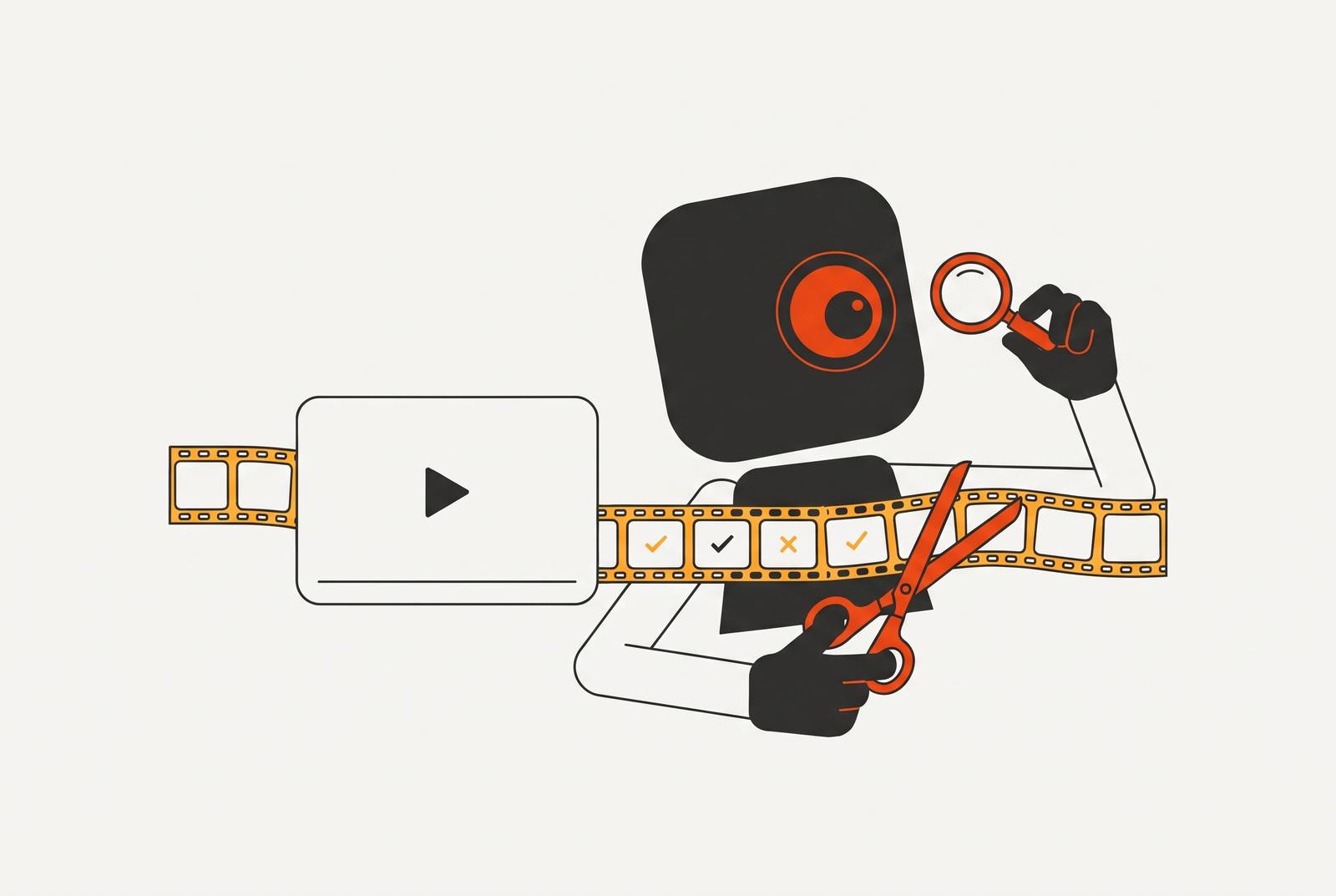
Agentic video editing lets AI plan cuts, pacing, zooms, and layouts from a brief, then review and revise its work without manual timeline work. For screen recordings, that makes AI the first editorial decision-maker. The creator’s essential skill is knowing which calls to delegate and which require human intent, product knowledge, or a final accuracy check.
How AI editors make decisions that used to belong to a human editor
People often picture AI editing as speeding up work someone has already decided to do. The deeper change is who makes that choice. When an editor infers what deserves attention and acts before anyone gives a specific instruction, it is making a production judgment.
That distinction still holds when the result looks like a simple cleanup. An editorial decision gives one part of a recording priority over another, shaping how a viewer understands it. It need not be part of a grand plan to make art. A product walkthrough has an argument, too, even if the high point of the drama is a setting that was saved successfully. Deciding how that argument reaches the viewer used to require someone to watch and judge.
The AI now makes those first calls from the recording’s signals. It monitors mouse movements, clicks, keyboard input, and audio, then infers what deserves emphasis. This is more than applying a fixed filter, but less than understanding the creator’s purpose. That middle ground is the useful definition of AI editorial judgment. It can make a sensible production choice without knowing whether the choice serves the intended lesson.
What can AI video editors decide on their own? The five calls on a raw recording
The first decision is what to cut and where to leave breathing room. Silence and filler-word removal turn detectable features of speech into choices about pacing. A human editor once had to hear a pause and decide whether it was dead air or useful space. The AI makes the first pass instead. In doing so, it decides how quickly the viewer should move through the explanation.
The second decision is where the viewer looks. Auto-zoom follows cursor movements, clicks, active windows, and form fields to bring a UI element into focus. On a 1080p or 1440p monitor, that element can occupy only a small fraction of the screen, making it hard to read on a phone or laptop. Zoom gives it visual priority. Cinematic easing curves and motion blur can make the move resemble camera work.
The third decision is how to structure the content. Chapter detection identifies topic transitions, while summaries select key points and turn them into skimmable text. Those choices decide what counts as a section and what deserves to survive in the shortened account. A viewer who reads only the summary receives the AI’s version of the recording’s priorities.
The fourth decision is what the viewer hears. Noise reduction, background sound removal, and audio normalization distinguish useful sound from interference. Some tools do this on-device during recording, while others work in post-production. Either way, the first judgment can precede human review. What sounds like simple cleanup is a decision about which parts of the audio deserve to remain audible.
The fifth decision is what the spoken words become in text. Transcription supplies the language used in captions and transcript-based editing, so its accuracy affects more than readability. It determines what edits are possible without re-recording. A word that is wrong can thus end up both in the published caption and in the text used to make edits. The AI is not merely typing notes in the corner.
How the AI makes those decisions — the signals it reads and the heuristics it applies
Audio energy can be a sign of speech, silence can suggest where to cut, and cursor proximity can suggest where to zoom. Changes in topic words can point to a chapter break. The system predicts where attention should go from evidence it can detect.
That prediction has a clear boundary. A cursor near a button does not establish that the button is the correct one to teach. A quiet stretch does not show why the speaker stopped talking. Repeated words do not distinguish a redundant passage from a deliberate callback. The AI can detect the pattern without understanding its role in the argument, much as a stopwatch can measure a speech without knowing whether it was worth hearing.
Faster processing does not remove that boundary. On-device inference now lets work that once needed cloud processing run on current hardware, without a trip to the cloud and back. The response gets quicker, but the heuristics have not changed in kind. Speed does not supply the missing context. A prompt result can still be based on the wrong interpretation of a perfectly clear signal.
The central gap is between measurement and intention. Audio energy, cursor movement, and transcript length are available to the system, while the viewer’s existing knowledge, an intended emotional beat, and the accuracy of a UI claim are not directly measurable from those signals. That gap explains both the appeal and the risk. The AI is strongest when the detectable cue and the desired editorial result point in the same direction.
Where AI editorial decisions reliably get the boring work right
Routine cleanup often meets that condition. Finding unwanted background sound or normalizing audio does not usually call for an understanding of the whole narrative arc. The production goal is relatively narrow. When the task is repetitive and the relevant signal is detectable, treating it as an unsolved manual chore wastes the advantage of AI editing. Nobody needs to earn a polished recording through heroic service to the noise floor.
A full-screen capture may keep every pixel but leave the control that matters too small to read. Tracking and enlarging the area of interaction makes that control visible. When the cursor points to what the explanation is about, the AI has a strong cue for where the viewer should look.
The practical benefit is pronounced in async video communication, including sales proposals, product walkthroughs, and support responses. These recordings need to communicate clearly without turning each explanation into a production project. An AI edit layer can make a usable, reasonably polished version available when recording stops. That removes a barrier to publishing. The AI can handle cleanup based on signals it can detect, while human review stays focused on choices that need knowledge beyond what is in the recording.
The decisions AI gets confidently wrong — and what that costs
The dangerous error is often the one that looks finished. Smooth motion, clean audio, and tidy captions make an edit look trustworthy, even when a choice behind it is wrong. Polish is not a fact-check. Unlike a human who knows why a pause was recorded or what the product should do, the AI may have no basis for recognizing the error. The viewer can become the first person to discover it.
Captions are a common example. A high overall accuracy rate can hide wrong technical terms, names, or sensitive phrases, and transcription systems can get phrases wrong or hallucinate them even when the audio seems clear. Those errors are not equally harmless. Verizon Media and Publicis Media’s 2019 research found that most viewers watch video with sound off in public settings, so captions are a key part of what those viewers get from it. Auto-generated captions should therefore be treated as drafts.
Product demos create a separate accuracy problem. The AI has not checked the live product, so a fluent summary, chapter title, or transcript claim may describe changed UI, a nonexistent pricing tier, or a feature no longer shipped. It cannot catch that mismatch by polishing the wording. Every screen, label, plan name, integration claim, and security statement needs checking against the live product before sharing. A confident-looking demo of the wrong UI can erode trust faster than no video at all.
Pacing failures can be harder to spot because nothing is obviously misspelled. The AI may remove a deliberate pause or place a chapter break at a topic-word shift that interrupts the argument. Waveform energy does not reveal whether viewers need time to understand what just happened. A cut that improves a detectable pacing signal can still damage the explanation.
Multi-camera color correction may miss differences in color temperature or make the same changes everywhere when skin tones, shadows, and white balance need to be judged in context. Recordings involving students or learners raise a more fundamental issue. With prompt-to-video generation and AI avatar substitution, questions of consent come before questions of production, and the AI cannot point out that difference. Neither visual consistency nor permission can be inferred from how finished the output looks.
What agentic editing and MCP integration change about who is in the loop
Agentic editing changes more than the number of automated features. Instead of applying one transformation, an agent takes an outcome, plans an edit, uses tools in sequence, checks its work, and revises in response to feedback. The sequence can include cuts, layouts, zooms, captions, audio, and export. The agent initiates the first pass. That shifts the human’s role from choosing each operation to defining what the operations should achieve.
An agent can reread the transcript and timeline or inspect frames of the edit. It can compare the result with the brief. It still cannot establish that a product claim is true merely by examining the recording that contains it.
MCP integration opens another route into those editing tools. An MCP server can let outside agents, including Claude, ChatGPT, Codex, or Cursor, drive the editor rather than requiring every instruction to originate inside it. The workflow implication is straightforward. The agent a creator already uses can become the interface for editing work. The creator remains responsible for supplying the purpose and approving claims the AI cannot verify.
As a result, prompt quality becomes an editorial skill. “Make this look good” provides little that an agent can check, while “tighten this demo to two minutes, zoom in when I click Settings, full camera for the intro” defines observable results. The second brief gives planning and self-review something to work against. Buyers can use this to tell apart automatic features that work on their own and an agent that plans, checks, and revises. Human judgment enters at the goal and continues through review of the finished timeline.
The skill set that actually matters when AI is making the first editorial calls
The creator’s practical response starts at recording time. Deliberate cursor paths, clear speech near a good microphone, and intentional pauses give the AI cleaner evidence for its decisions. Hesitant mouse movement, background noise, and rushed narration do more than make rough footage. They muddy the cues the editor uses to assign attention. A teleprompter can also reduce filler words at source, leaving fewer corrections and fewer opportunities to cut something that should stay.
The next skill is writing a brief the agent can test. Length, zoom triggers, and layout transitions describe outcomes more clearly than a request for something “professional.” The brief is now part of the edit. For screen recordings, readability at the point of interaction is a concrete goal, while narrative recordings still require judgment about rhythm beyond detectable silence. Multi-camera footage also needs someone to check the color in context instead of trusting the same correction across all of it.
Human review should then concentrate on what the AI cannot check. Captions need scrutiny for technical terms, product names, pricing, and phrases that could mislead or embarrass. Demo claims need comparison with the live product at publication. Structure needs a different test. Review should test whether the cuts and chapter breaks serve the intended argument.
Faster production lowers the barrier to updating a demo, which raises the obligation to keep it accurate. A recording can become misleading without anyone deliberately changing its claims. Fast-moving products therefore need a refresh cadence tied to significant UI changes. AI can make the next edit easier, but a human still has to recognize when the old one has stopped telling the truth.